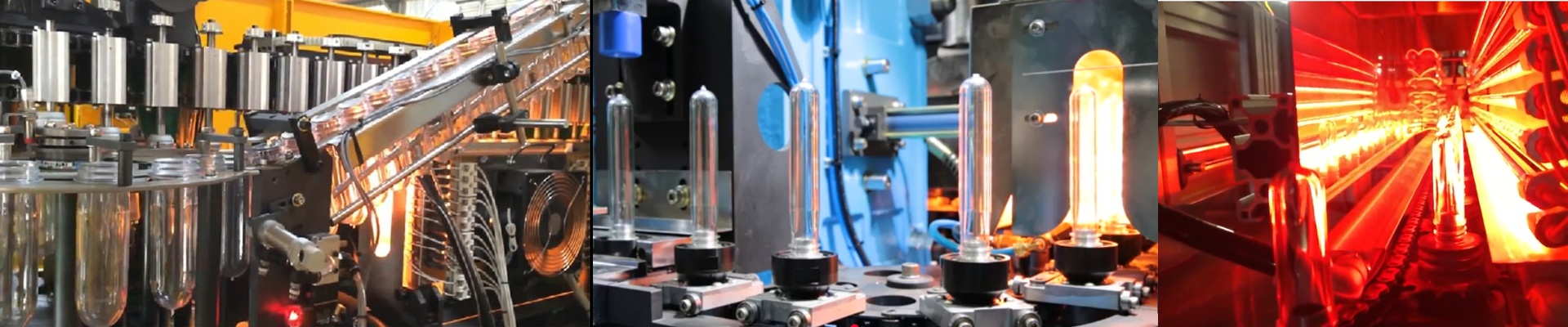
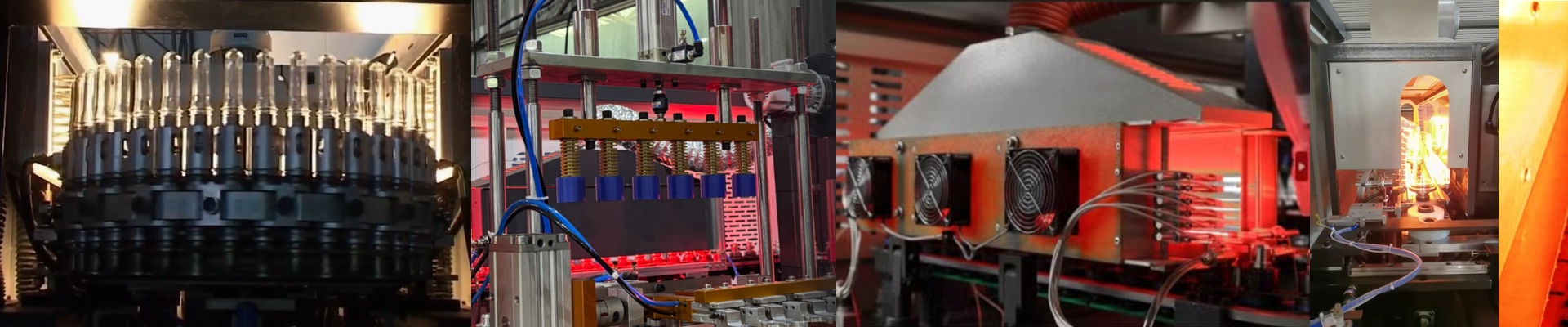
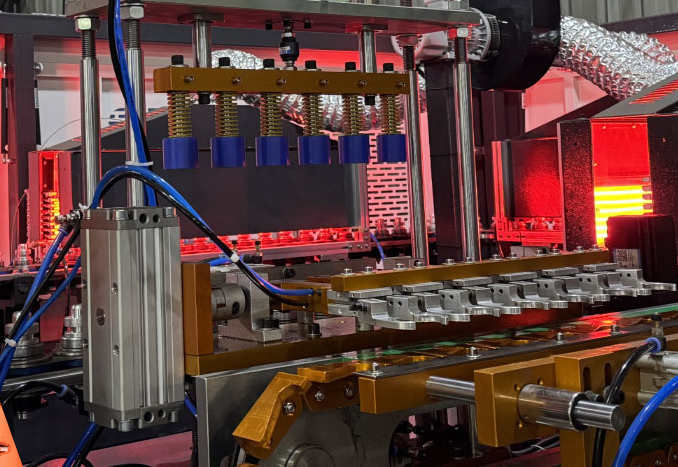
On the blow molding floor, preform temperature control isn’t optional—it’s the line between making cycle time and making scrap. When the heat drifts, you know it immediately: uneven wall thickness, blown threads, and resin going straight into the reject bin. We built our infrared lamp line to stop that drift at the source. What actually matters, technically The catalog is short-wave halogen and quartz infrared emitters, specced for preform preheating. Every lamp is rated for 240V and uses the R7s connector standard you see across Sidel, Krones, SIPA, Husky, SACMI, and Nissei ASB blow molders. We match output to the heating tunnel geometry so energy density stays consistent across the neck and body zones. Power is held within ±3% tolerance, and the spectral profile is tuned to PET absorption bands—not just chasing raw watts. Why this plays on real machines When you match OEM heating parameters, the stretch blow molding window stays stable. In practice, that translates to quicker stabilization after changeover and fewer temperature-driven rejects. These lamps run 5,000+ hours with less than 5% output drop, which means less downtime swapping parts and a heating curve you can count on, shift after shift. Energy use stays predictable because efficiency comes from the right wavelength and reflector geometry, not from oversizing. A few shop-floor notes Installation is straightforward, but alignment is not optional. Even a small offset in the reflector will throw off preform temperature uniformity. If the mounting and connector are the same as what you’ve got, you can plan on a 15-minute swap. If the terminal block or bracket is different, an adapter plate is sometimes the quick fix. And don’t ignore airflow around the heating zone. Ambient drafts will shift heat distribution—keep the tunnel seals in good shape so the designed temperature profile stays intact.