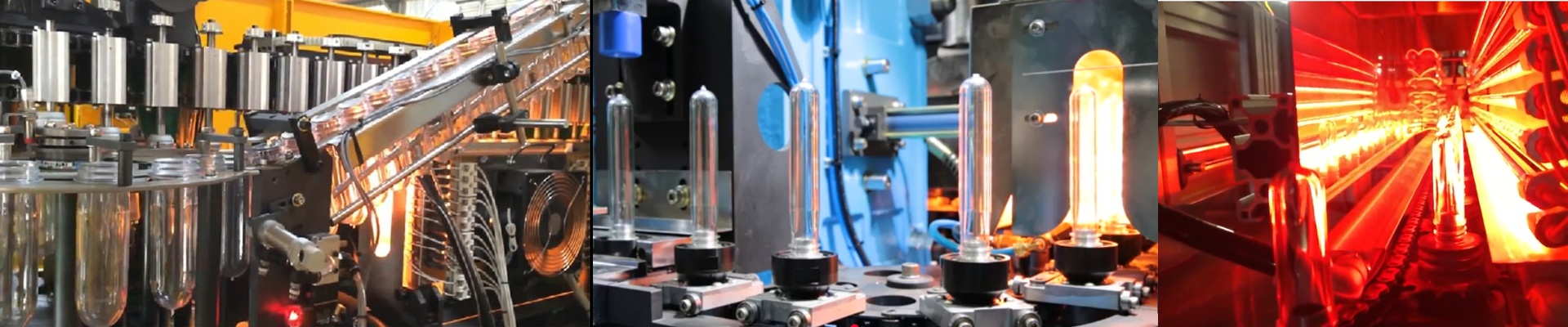
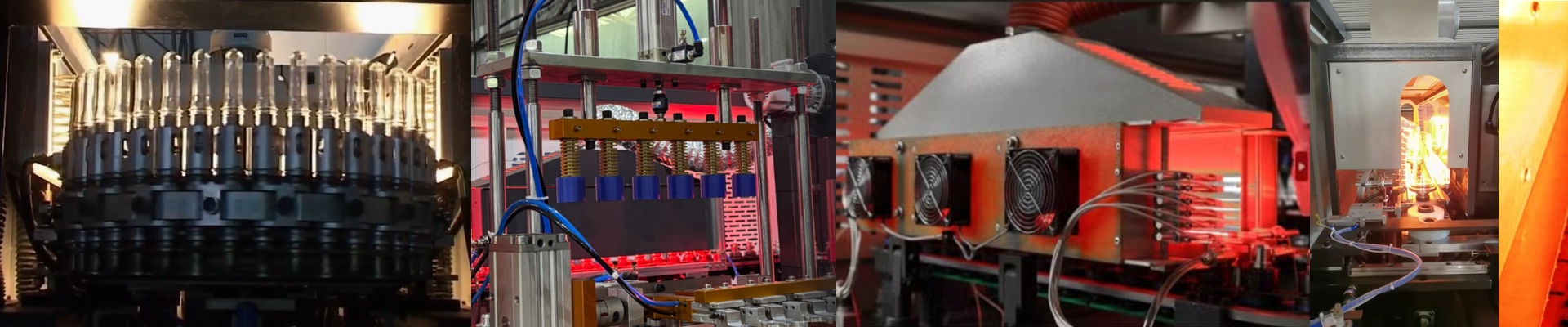
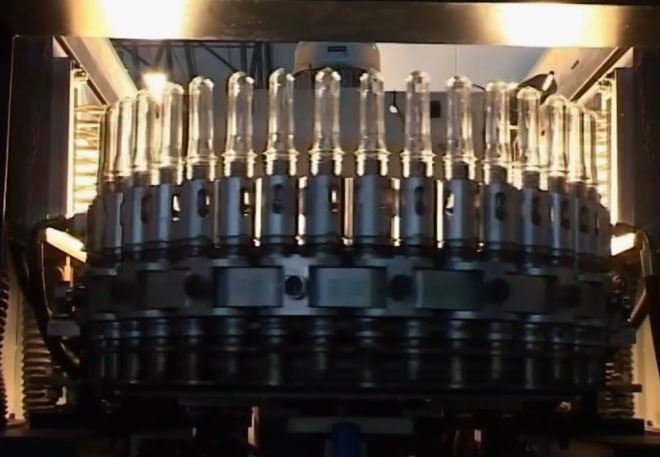
Out on the blow molding floor, uneven preform heating shows up immediately—thin walls, stress marks, and rejects that drag the whole line down. You need heat that gets to setpoint fast, holds steady, and keeps doing its job shift after shift. We built our infrared heating elements for exactly that reality. What matters under the hood These emitters are short-wave quartz infrared, chosen because they respond quickly and stay controllable inside the heating tunnel. The specs line up with what the machines actually run: 1200–2400 W, 230 V or 115 V, and standard R7s connectors so swapping a lamp is straightforward. The quartz tube packs high power density and warms up fast, so you hit temperature quickly after a changeover. Output stays consistent along the whole lamp length—critical when you’re running multiple cavities and need repeatable heating profiles. Why this works in stretch blow molding The preform has to be heated uniformly before stretching. If temperature drifts, you see weight variation and weak spots. With these elements, the heat is stable and repeatable, which helps keep cycle times consistent and cuts scrap. Energy use drops because the emitter heats only what it needs, when it needs it, and the fast response shortens idle time during startups and setup. On Sidel, Krones, SIPA, Husky, SACMI, and Nissei ASB machines, matching wattage, voltage, and dimensions means you can replace a lamp without reworking the tunnel. The practical details you can’t skip Infrared is efficient, but the lamps are sensitive to surface condition. Keep reflectors clean and aligned; otherwise, you lose output and end up running hotter to compensate. Double-check mounting and connectors—some lines use proprietary brackets. Stay within the rated voltage and you’ll get long life with stable output. Plan replacements as part of scheduled maintenance, not when you’re already in a production emergency.