



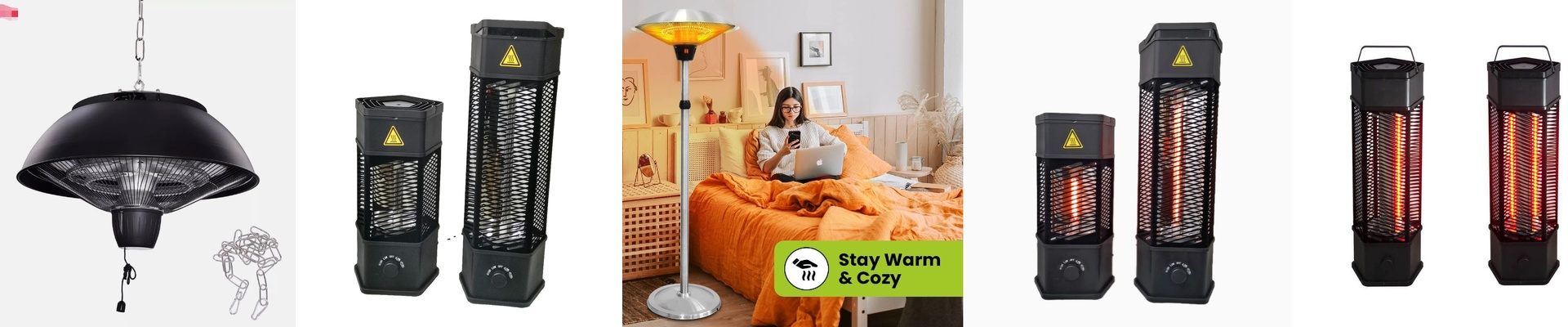

A bathroom should feel welcoming the second you step in—not like a space that drags its feet warming up and then hits you with a big energy bill. Whether it’s a tight powder room or a full spa-style suite, the wrong heater leaves you waiting, still cold, and paying for heat that never quite gets to you. Infrared bathroom heaters fix that—if you size the wattage to the room.
What matters, technically
Infrared bathroom heaters are rated in watts, and that number is what determines how much radiant warmth actually reaches people and surfaces. For small bathrooms—roughly 4–6 m²—a 150–200 W infrared lamp is usually enough to knock the chill off fast. Medium rooms (6–10 m²) do better on 250–350 W. Larger bathrooms (10 m² and up), especially ones with stone or tile, generally need 400–600 W to offset the thermal sink of cold floors and walls. We build these units around direct radiant heat, so the warmth lands where you feel it—on skin, on towels, on the floor—instead of heating air that disappears every time the door opens. Many run on standard 230 V circuits and use moisture-resistant housings, with safety protections like tip-over shutoff and overheat cutout.
Why it works in a bathroom
Bathrooms get used in quick bursts, so recovery speed is the name of the game. Size an infrared heater correctly, and it brings the space up to comfortable in minutes—no need to run a fan-heater long enough to spike energy use. Because the heat is directional, you can keep the room cozier without overheating the whole house. And the comfort is practical, not theoretical: warm floors under bare feet, towels that dry faster, and a more stable temperature that softens the shock of stepping out of the shower.
The details that actually matter
Matching wattage is only half the job. The heater needs a dedicated circuit and smart placement—high on the wall or ceiling, angled to avoid glare and pointed away from direct water spray. Confirm the IP rating is appropriate for the bathroom zone, and make sure your wiring and switch can handle the load. One practical reality check: infrared warms people and objects directly, so the air can still feel cooler than the surfaces. For a lot of users, that’s the point—fast comfort without the dry air and the high bills.